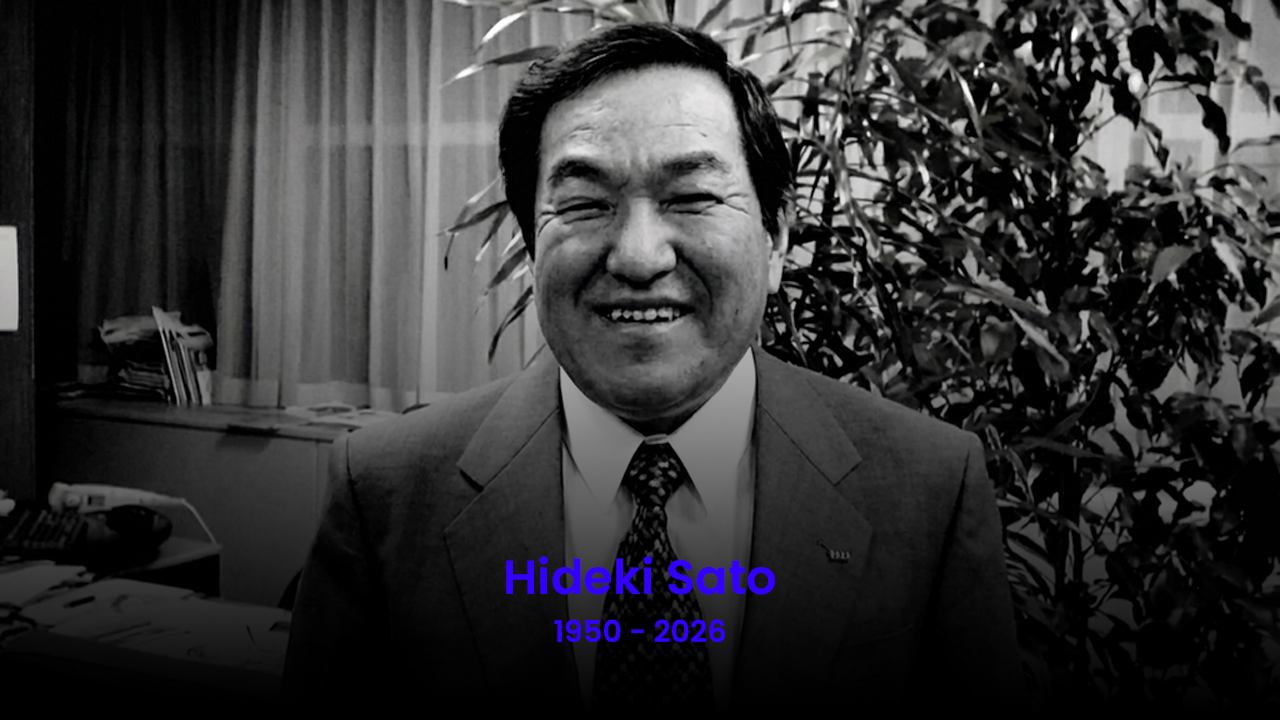
The passing of Hideki Sato last Friday, February 13th, marks the end of an era for SEGA fans around the world.
The news was reported by the Japanese website Beep21, with confirmation shared through SEGA’s official social media channels (here and here). For many gamers, especially those who grew up in the 80s and 90s, this news about hits deeply.
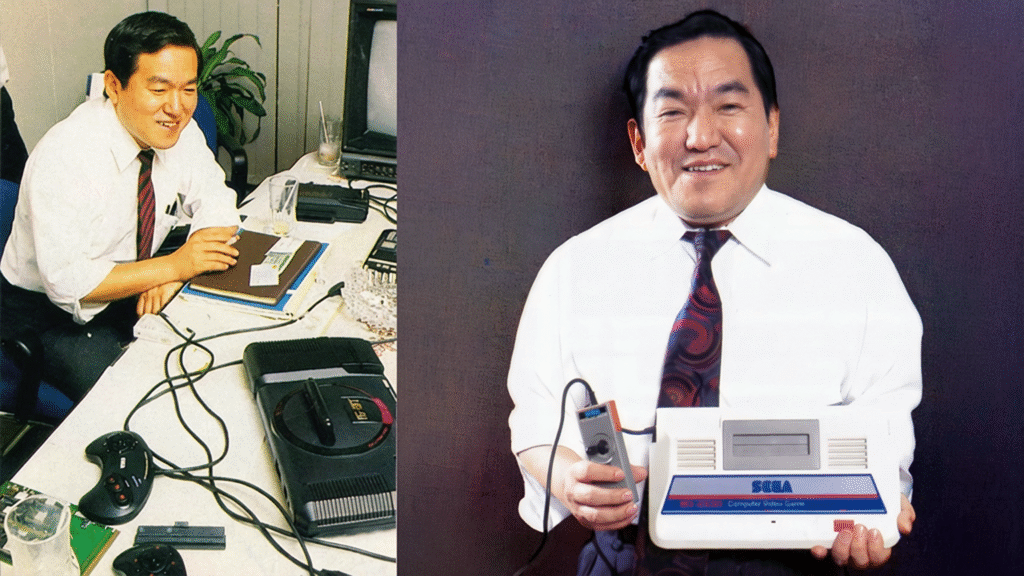
Hideki Sato was one of the key figures behind the creation and design of SEGA consoles, and he played a fundamental role in shaping the hardware that defined an entire generation. He led the development of systems like the Master System, Mega Drive (Genesis), and Saturn, and also contributed to legendary arcade boards such as System 16 and Naomi.
System 16 gave us classics like Shinobi, Altered Beast, and Golden Axe. Naomi later powered titles like Crazy Taxi, Marvel vs. Capcom 2: New Age of Heroes, and F355 Challenge. These weren’t just games.
A Career That Shaped SEGA History
Hideki Sato graduated in Electrical Engineering and joined SEGA in 1971, during the electro-mechanical arcade era. By the 1980s, he was heading SEGA’s R&D department, leading teams that helped transform the company into one of the most iconic names in gaming.
Between 2001 and 2003, he served as President and CEO during one of SEGA’s most challenging periods, navigating the company through the post-Dreamcast era and the eventual merger with Sammy.
His influence wasn’t limited to hardware. It was structural. Strategic. Visionary.
A Personal Goodbye
This week’s blog post was already finished and scheduled, but I felt it was important to pause and pay tribute to Hideki Sato.
As many people who know me are aware, I began writing about video games in Brazil in 1993, during the final days of Super Game magazine, a publication dedicated exclusively to SEGA. It later became Super Game Power after merging with Game Power (focused on Nintendo).
SEGA was always my home.
I proudly focused on covering games for the Master System, Mega Drive (Genesis), and Saturn. I had the opportunity to visit Tec Toy and test games before release, including Phantasy Star II in Portuguese, Comix Zone, and even a prototype of SEGA Rally. Those experiences shaped my career. And honestly, shaped me.
When I think about those years, it’s a mix of nostalgia, gratitude, and disbelief that we lived through something so special.
I can’t imagine my life without SEGA consoles, especially the Mega Drive. Sonic the Hedgehog, Strider, Castle of Illusion, Alisia Dragoon, Altered Beast, Gaiares, Thunder Force III… these aren’t just titles. They’re memories.
And yes, I’ll admit: the early 32-bit era never fully won my heart at first. Seeing blurry polygons and low frame rates after witnessing the artistic peak of 16-bit pixel art felt strange. But time changes perspective. Eventually, I learned to appreciate that generation for what it was, a transition, an evolution.
Thank You, Hideki Sato
Thank you for the hardware.
Thank you for the risks.
Thank you for the golden age of SEGA.
For many of us, your work wasn’t just engineering.
It was magic.