A bit of my history with Marathon
Playing the new Marathon game reminded me of the day I went to a friend’s house in 1995 and he showed me what he called a “science fiction Doom.” That game was Marathon.
Back in the 90s, at least in Brazil, it was very unusual for someone to own a Mac. As someone who already loved games like Doom, Wolfenstein, and Heretic, I was immediately excited to try something new, and, in a way, something that felt out of reach. I played for a few hours that day… and never went back, mostly because that friend and I weren’t that close.
In 1996, I had another opportunity. At the time, I was working at PC Player and Super Game Power magazines, and Apple, which had recently opened operations in Brazil, invited part of our editorial team to test their computers and play Marathon 2: Durandal. We spent the entire afternoon playing. I remember being genuinely impressed, even though I wasn’t the one who ended up writing the article. That was likely done by my late friend Fabio Pancheri.
Years later, in 2007, I finally had the chance to properly revisit Marathon 2 when it was re-released on Xbox 360. By then, it already felt dated, but it was still a very interesting experience.
What Marathon used to represent
Created and released by Bungie in 1994, long before Halo and Destiny, Marathon always had its own identity within the FPS genre.
While many games at the time focused on fast-paced action, Marathon leaned into atmosphere and complexity. It told its story through terminals, required players to manage elements like oxygen in certain areas, and featured more intricate level design than most of its contemporaries. It was a game that asked more from the player, more attention, more involvement, more curiosity.
Today, the original trilogy is available for free on Steam (Marathon, Marathon 2: Durandal and Marathon Infinity), and it’s still worth exploring, even if just to understand its legacy. In my opinion, the three games, Marathon, Marathon 2: Durandal (from 1995) and Marathon Infinity (from 1996), tell a beautiful story and easily make the series one of the most important milestones in FPS history.
Where the new Marathon stands
Almost 30 years later, Marathon returns, but not as a single-player FPS. This time, it takes the form of a multiplayer PvPvE extraction shooter, a genre that has been gaining traction in recent years with titles like Escape from Tarkov, Hunt: Showdown, and even Arc Raiders.
Which raises an important question: Does Marathon really have a place in this space?
I believe it does, for one simple reason: Bungie understands gameplay at a level few studios can match. From Halo to Destiny, there’s a clear pattern in how their games feel. Movement is precise, gunplay is satisfying, and everything works together in a way that feels polished and intentional. Even when Destiny receives criticism for its content model, its core gameplay has rarely been questioned.
That alone makes Marathon worth paying attention to.
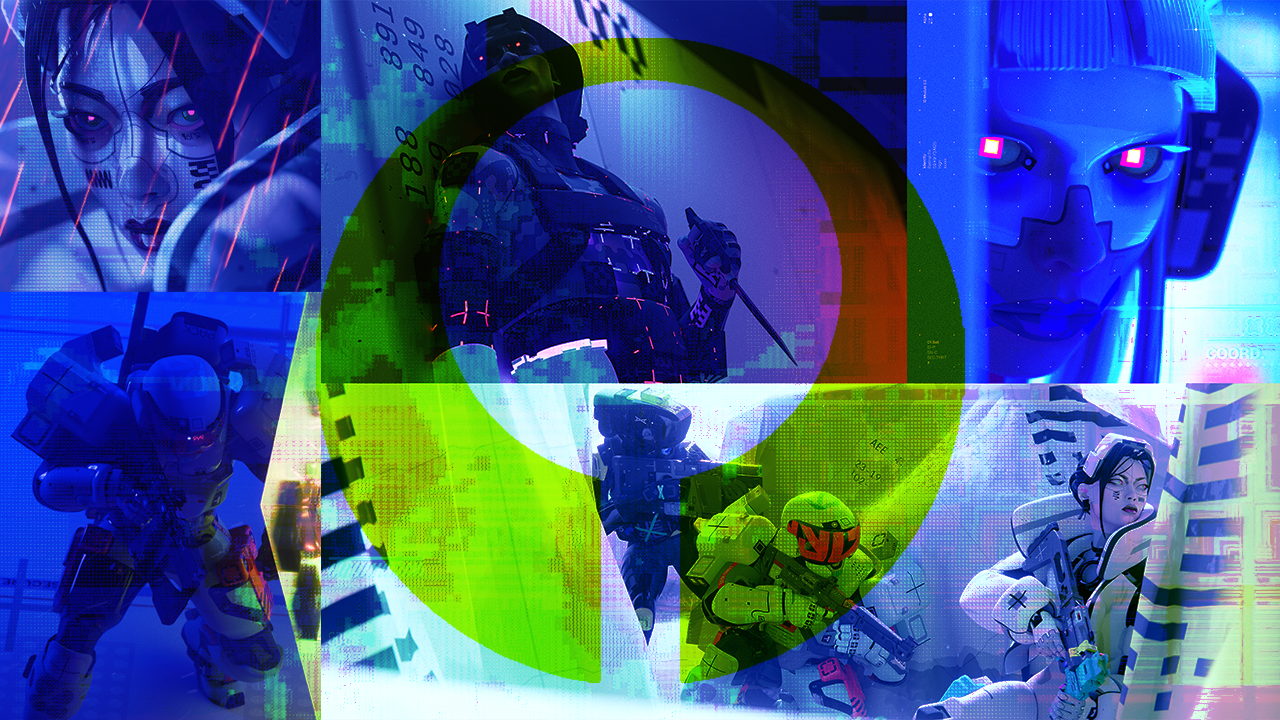
A new identity: neon, color, and attitude
One of the most striking aspects of the new Marathon is its visual identity. And in a way, it feels deeply connected to a specific moment in time.
The 90s were defined by a cultural shift. Cyberpunk anime like Ghost in the Shell and Battle Angel Alita were gaining attention, electronic music was taking over clubs, rave culture was spreading, and the internet was becoming a space that felt open, chaotic, and full of possibilities. Visually, everything leaned into bold colors, neon lights, metallic textures, and a sense of artificial intensity.
Games like Wipeout (and its incredible soundtrack), System Shock, and Syndicate reflected that atmosphere perfectly.
The new Marathon seems to take all of that and reinterpret it through a modern lens. The result is a world that feels vibrant, aggressive, and highly stylized, without losing coherence. The characters, known as Runners, reinforce this idea. They are humans who abandoned their natural bodies in favor of enhanced cybernetic forms, a concept that fits perfectly within this aesthetic direction.
What stands out in practice
Without turning this into a full review, some elements become clear very quickly.
The gameplay feels sharp and responsive, exactly what you would expect from Bungie. The environments are designed in a way that constantly encourages movement, exploration, and awareness. Sound design plays a major role, especially in how it builds tension throughout each match. Applause to composer Ryan Lott and his unsettling (in a good way) soundtrack.
And like any extraction shooter, there’s always something at stake. If you die, you lose everything. That alone changes how you approach each encounter.
Personally, I tend to avoid direct confrontation in games like this. I prefer to focus on objectives, explore carefully, and extract (or here exfiltrate, or even “exfil”) safely. Based on my experience with Arc Raiders, in Marathon, players seem much more aggressive, especially around extraction points. That shift in behavior creates a very different kind of pressure compared to other games in the genre.
So what is Marathon really trying to do?
Marathon is not trying to recreate the past. It’s not attempting to be the same game it was in 1994.
And maybe that’s exactly why it works.
Bungie has always been a studio that evolves its ideas rather than repeating them. Marathon led to Halo, Halo led to Destiny, and now Marathon returns again, not as a continuation, but as a reinterpretation. Whether it will succeed in the long term is still uncertain. But one thing is clear:
Marathon isn’t coming back because of nostalgia. It’s trying to find its place in a completely different landscape.
And that alone makes it a project worth watching.
If you enjoy this kind of perspective on games, you can also check my article about modern games that capture a classic feeling.
Bungie official Marathon page

About Spencer Stachi
Spencer Stachi is a communications professional and video game specialist based in Montréal, Canada. With a background in PR, social media, and the gaming industry, he has worked with international publishers including Atari, Electronic Arts, and WB Games. He is also a Certified Accessible Player Experience Practitioner and a Safe in Our World Ambassador, advocating for accessibility and mental health in games and the gaming industry.