Lovish is one of the most pleasant surprises of the year, and in this Lovish interview with Matt Kap, I had the chance to learn more about the ideas behind the game. I honestly couldn’t stop playing until I finished it. Actually, I still haven’t really stopped, there’s so much to explore, plenty of hidden secrets, and the crowns to find (which took me a while to fully understand the pattern behind them). If you enjoy retro-inspired indie games, Lovish is definitely worth your time. We spoke very highly of the game on the Mega Busters podcast (Youtube and Spotify – sorry, it’s in Portuguese), and I was immediately interested since I was already familiar with Astalon: Tears of the Earth, LABS Works’ previous title, a Metroidvania with some very unique mechanics.
These two games showcase a lot of what LABS Works is capable of. The studio has been around since 2018 and is led by developer Matt Kap, someone I have a lot of respect for. I also had the chance to do a short interview with him, which, let’s be honest, is already pretty cool considering this blog doesn’t have a massive audience yet.
Lovish: A Love Letter to 8-bit Games
You play as Sir Solomon, who, in a moment of insecurity, decides to set off alone on a journey to save (and win the heart of), Princess Tsuna. But why would he go alone to face the Devil Lord if he’s part of the Saviors of Light? What if the princess ends up falling for one of his companions instead?
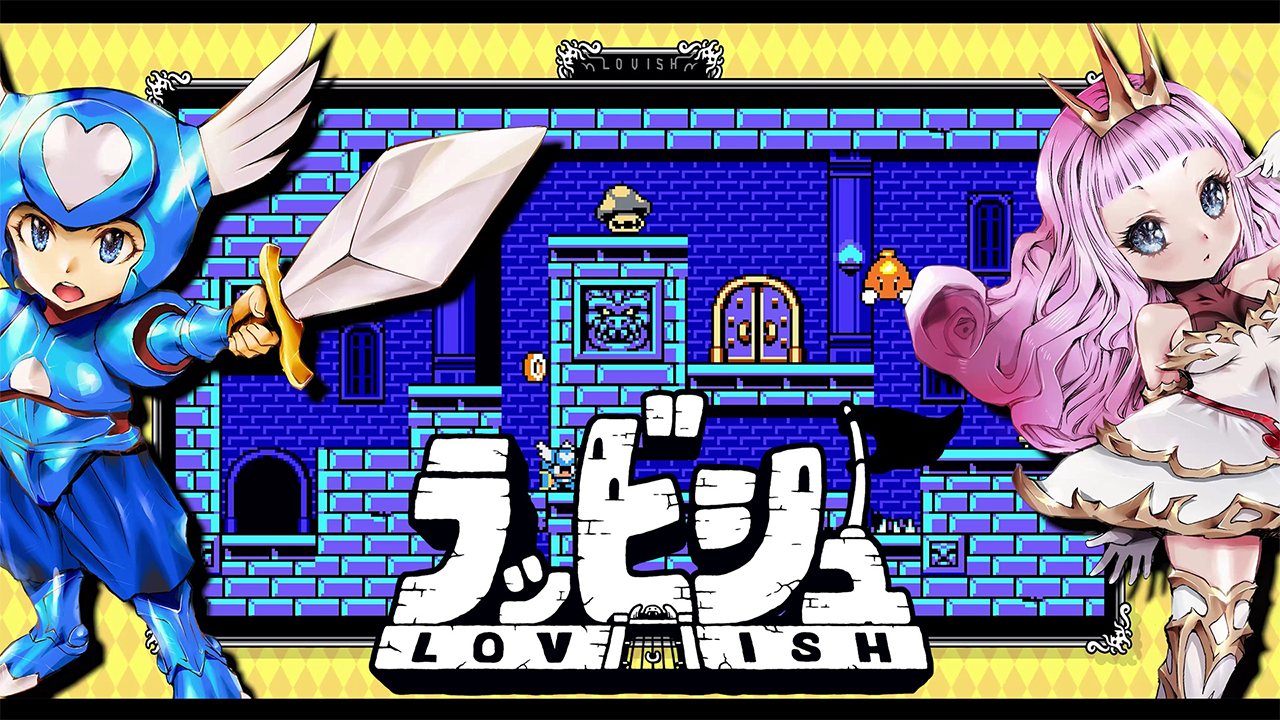
With this premise, combined with its 8-bit aesthetic and single-screen levels, Lovish easily captures the hearts of players looking for retro experiences, especially those who lived through the Nintendo Entertainment System era.
Lovish is one of the most surprising games I’ve played recently, mainly because of its simplicity and gameplay. On top of its strong 8-bit visual style, the game features a subtle “soft pixel” screen effect that slightly blurs the image, recreating the feeling of a 240p CRT display. The goal is to complete levels, defeat bosses, and uncover how to find the hidden crowns in each stage. One important detail: a single enemy hit is enough to defeat Solomon.
With excellent replayability thanks to hidden crowns and secrets, memorable boss fights, and charming inter-level scenes, Lovish becomes an even more unforgettable experience.
Six Questions for Matt Kap
I didn’t want to go too far with the questions, the idea here was to give fans of LABS Works a bit more insight into the studio’s inspirations and future. Now, here comes the slightly embarrassing part: I didn’t realize that Matt Kap is actually the guitarist of one of my favorite Canadian punk bands, MUTE, a band I’ve seen live three times here in Montréal.
So, with a bit of embarrassment, I asked him these questions. Thank you very much, Matt Kap, for taking the time to answer them!
1. The first question I’d like to ask is, why are both Astalon and Lovish made with an 8-bit aesthetic?
The simple answer is because I love the 8-bit aesthetic :). Additionally, LABS is a really small team, so higher fidelity means that production will take a lot longer (look at Castle In The Darkness 2 for instance lol). But really it’s about replicating the magic I felt when I played 8-bit games as a kid.
2. Four and a half years passed between Astalon: Tears of the Earth and Lovish. How did the Lovish project come about?
We are working on several projects at a time, so I wanted to make something quick and fun as a side project. As with all things, the scope blew up a little (a lot hahah). But I’m happy with how it turned out. It’s a very unique game, and for players who are completionists, there’s a lot of content in there.
3. What games inspired you to create Lovish and Astalon: Tears of the Earth?
For Lovish, my biggest influences were probably Kirby, Maze of Galious, and Instagram reels. Hahah. I wanted to make something cute with a lot of bite-sized stuff (levels, jokes, scenes, surprises).
For Astalon: Tears of the Earth, Faxanadu, Star Wars, Castlevania, too many to list. I like to look at screenshots of games that I never played and imagine what the gameplay would have been like, so a lot of influences on both games were kinda like that. And that’s probably why both games don’t feel much like other similar looking games.
4. What games do you consider essential and that all players who played and loved Lovish should play?
Hmmm… This is a tough one! I guess Megaman 2-3, Pampas and Selene, Maze of Galious, Adventures of Lolo. None of those are like Lovish at all though, hahah. Fun fact, Lovish actually started as a Galious-like! But we were already working on other metroidvanias, so I changed the game design.
5. What was the biggest challenge in developing Lovish?
The biggest challenge was probably localization. Because of the engine we used (Clickteam Fusion), I wasn’t able to figure out a way to make pixel fonts from all regions/languages display properly. So instead, every text that appears in the game is an image. There are about 10000 images, and the monotony was grueling, hahha.
6. I hope Lovish received all the love it needed and that it was a success. And now, what’s the next step?
Thanks so much, Spencer! Fingers crossed🤞! Next we will focus on finishing Castle In The Darkness 2, maybe announcing another project, and a couple of other surprises!
I hope you enjoyed this article and that you give Lovish a try! You can learn more about LABS Works here. If you’re interested in similar topics, I also recommend two recent articles I wrote: one about modern games that capture the feeling of playing a retro classic for the first time, and another about the new Marathon.

About Spencer Stachi
Spencer Stachi is a communications professional and video game specialist based in Montréal, Canada. With a background in PR, social media, and the gaming industry, he has worked with international publishers including Atari, Electronic Arts, and WB Games. He is also a Certified Accessible Player Experience Practitioner and a Safe in Our World Ambassador, advocating for accessibility and mental health in games and the gaming industry.